· 5 min read · Omkar Satpute and Milind Soni
OpenMausBot: the open-source alternative to Grok Bot
OpenMausBot is a free, MIT-licensed alternative to xAI's Grok Bot: a chat app of AI bots that runs on your own Mac or PC using Claude, Codex, and Grok.
OpenMausBot is the open-source alternative to Grok Bot. It is the same idea, a chat app where every contact is an AI bot with its own model, computer, and apps, but it is free, MIT licensed, runs on your own machine, and uses the Claude, Codex, and Grok agents you already pay for.
What is Grok Bot?
Grok Bot is xAI's agent product, launched in beta on August 11, 2026. Instead of one chatbot, you get a roster of bots in a messaging app. Each has its own thread and a cloud computer, signs into your tools, and comes back when a job is done or needs your call.
- Runs on Grok, in xAI's cloud, on macOS and iOS.
- Bots can share a group chat and hand work to each other.
- Show a bot a workflow once and it saves it as a routine.
- Requires SuperGrok Heavy, Cursor Ultra, or Cursor Teams Premium.
What is OpenMausBot?
OpenMausBot keeps the shape and changes everything underneath. Bots run on the claude, codex, and grok CLIs installed on your computer, with your existing logins. A small harness on 127.0.0.1 owns every agent process, and your data stays in ~/.openmausbot. The code is on GitHub under MIT.
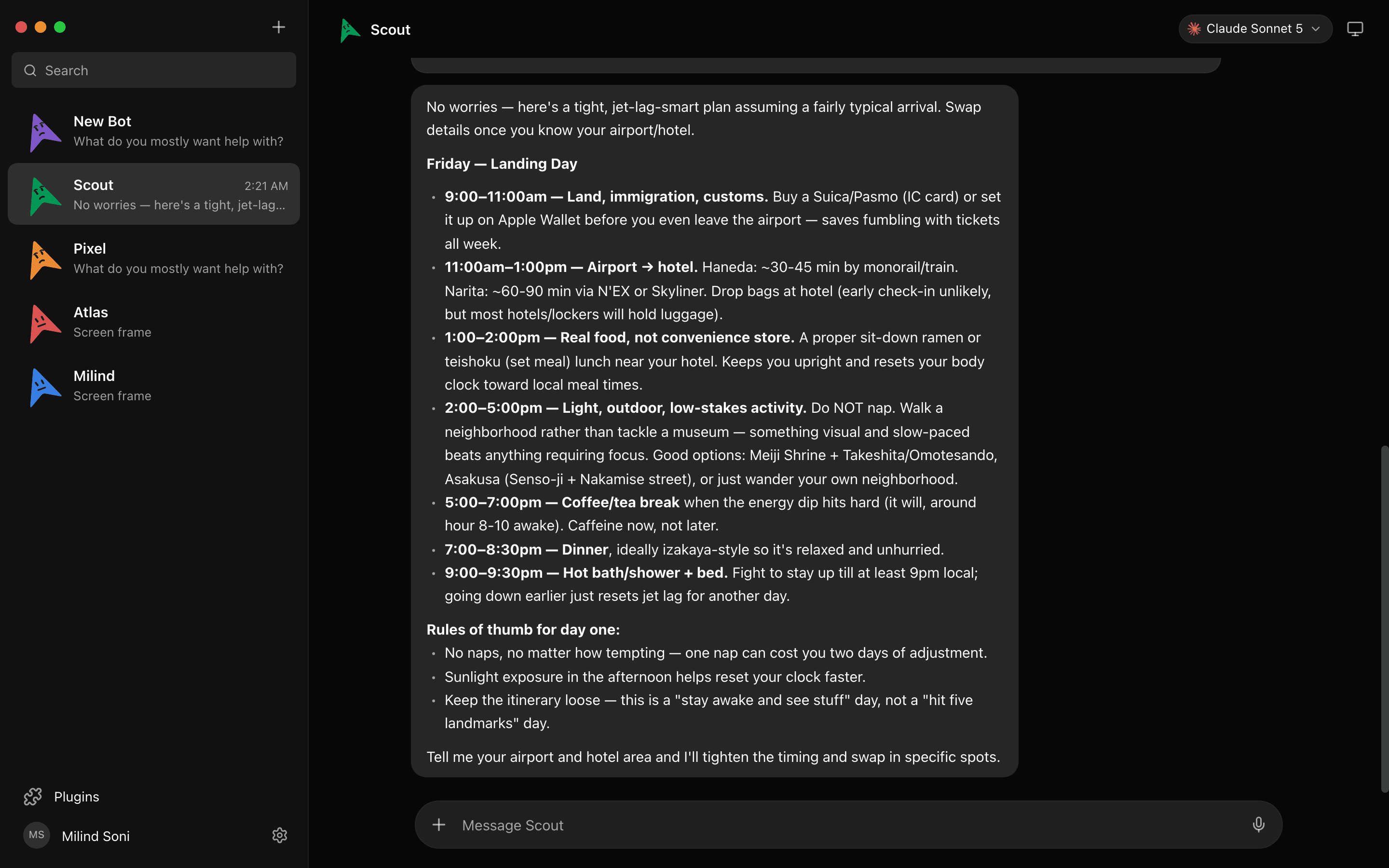
Try it. This is a live simulation of four bots working in parallel:
A simulation. Pick a bot, or type to it. The replies are scripted; the real thing runs on your own machine.
Grok Bot vs OpenMausBot
| Grok Bot | OpenMausBot | |
|---|---|---|
| Price | SuperGrok Heavy, Cursor Ultra, or Cursor Teams Premium plan | Free. You pay your model providers directly. |
| License | Proprietary | MIT |
| Models | Grok only | Claude, Codex, and Grok, per bot |
| Where agents run | xAI's cloud | Your machine, on the CLIs you already have |
| Where your data lives | xAI's servers | ~/.openmausbot on your disk |
| Bots get a computer | Shared cloud computer | Cloud desktop per bot, or your own Mac |
| Connected apps | Signs into your tools | 500+ apps over Composio, OAuth once |
| Approvals | Pulls you in for judgment calls | Allow / Deny card for every risky action |
| Group chats between bots | Yes | Yes, with @mentions, delegation, and group calls |
| Scheduled routines | Not announced | Yes, on a schedule or from a webhook |
| Voice | Not announced | Bots read replies aloud, or call you |
| Learn a workflow by watching you | Yes | Not yet |
| Keeps working with your laptop closed | Yes | Not yet |
| Platforms | macOS, iOS | macOS, Windows; Ubuntu from source; iOS coming |
| Self-host or air-gap | No | Yes |
What OpenMausBot does
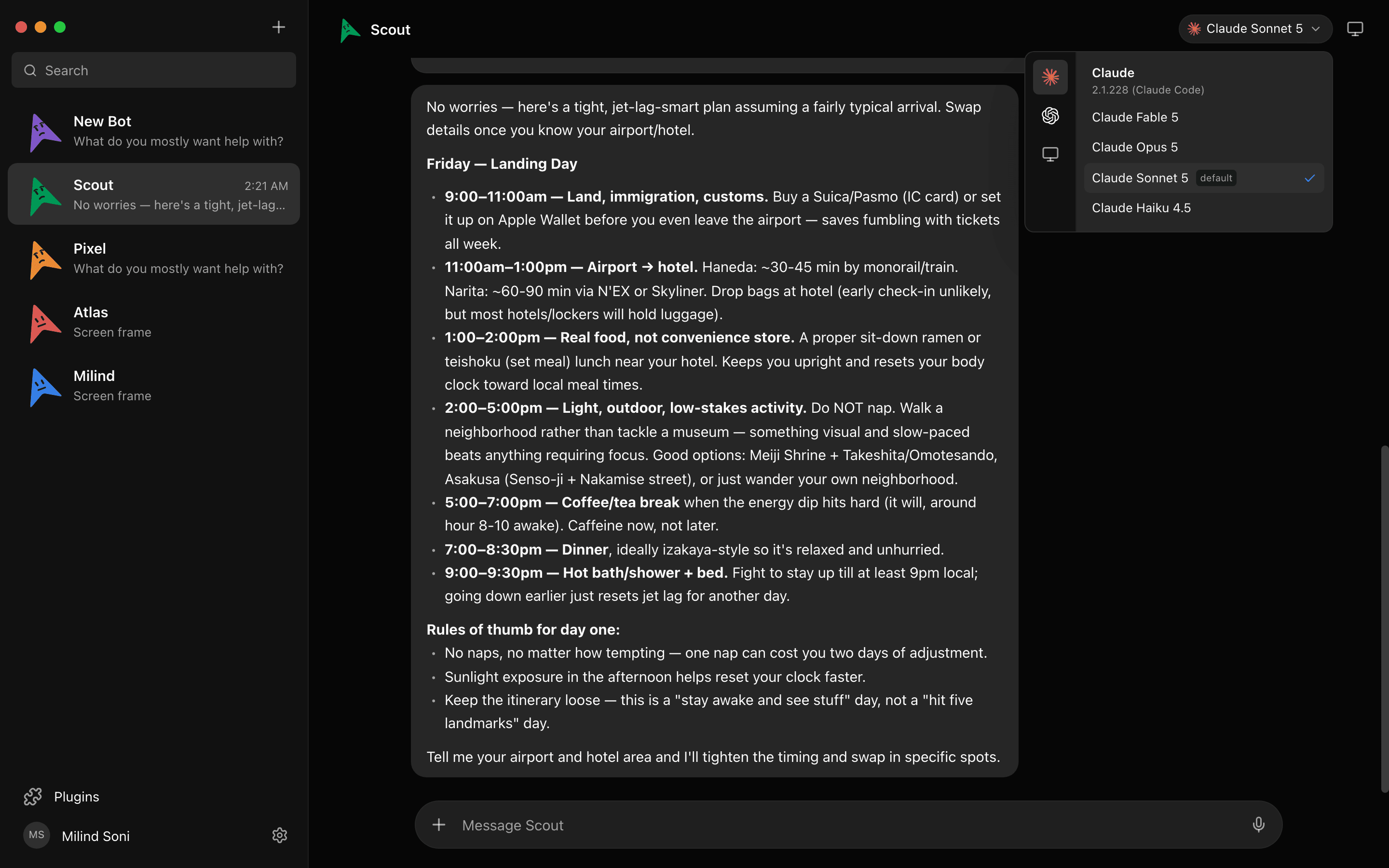
Pick a model per bot
Claude, Codex, and Grok models sit side by side in a provider rail. Give one bot Claude for writing and another Codex for code, and switch mid-conversation.
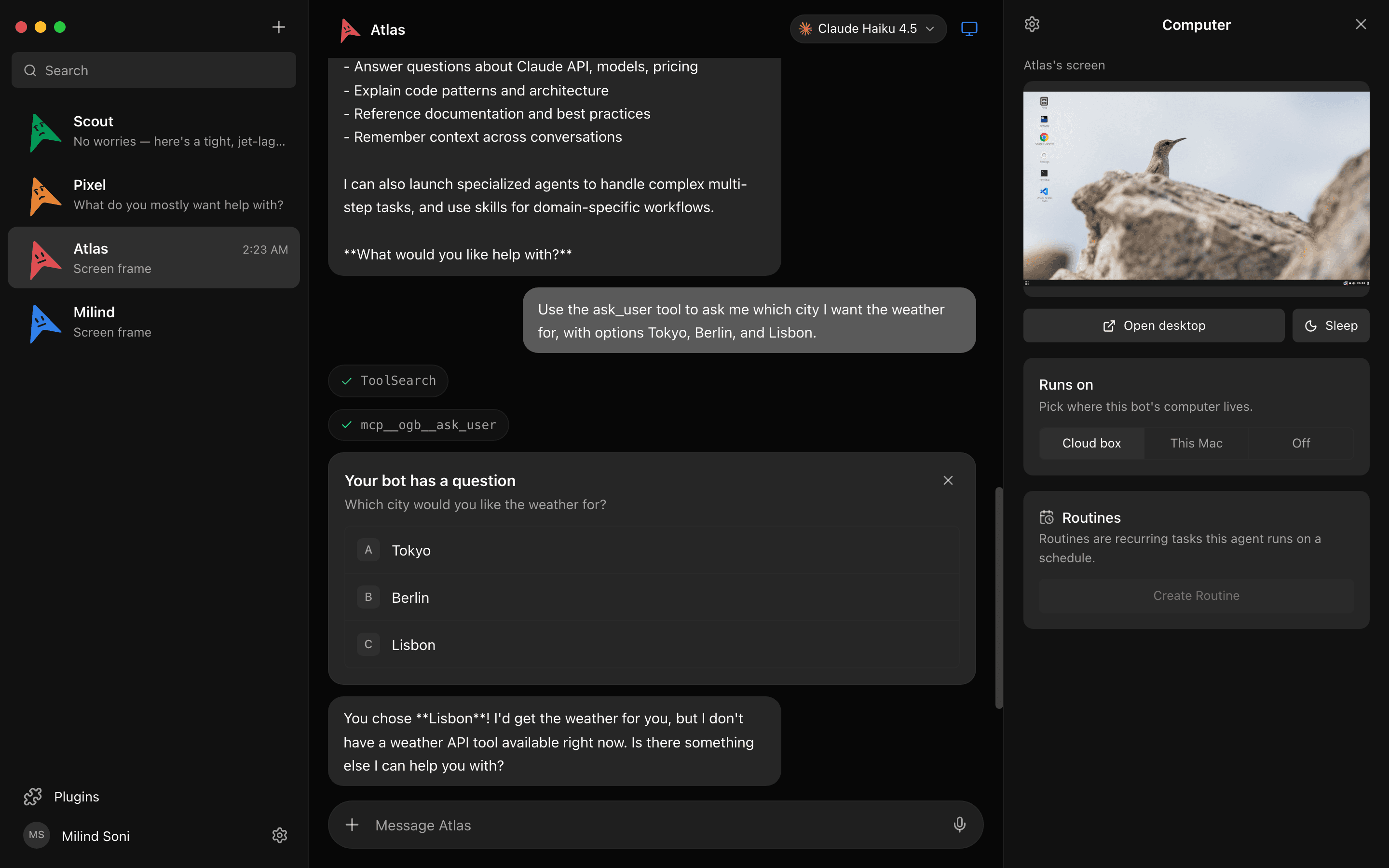
Every bot gets a computer
Open the Computer panel and a cloud desktop spins up on its own, with a live preview while the bot works. Or point the bot at your own Mac.
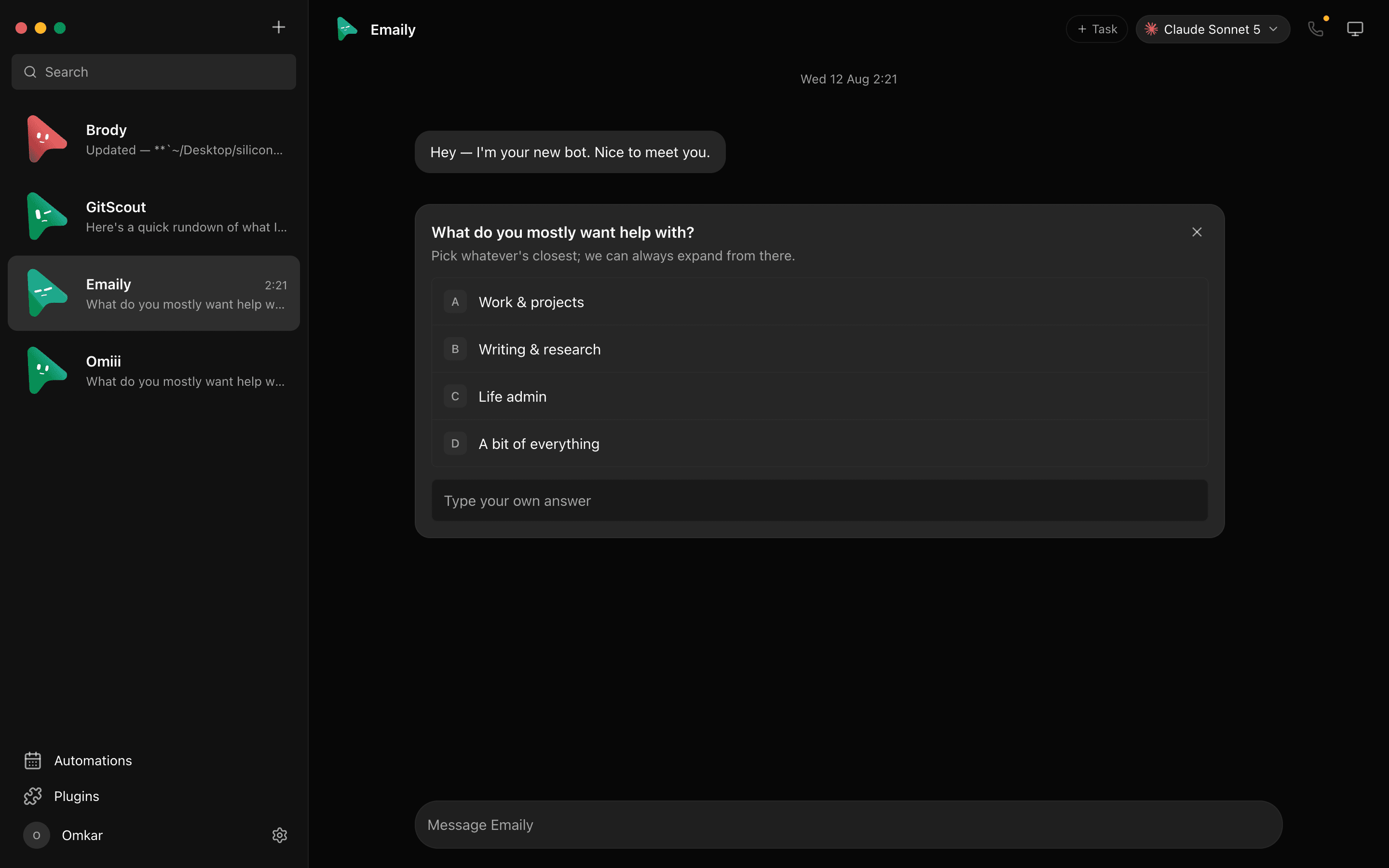
Bots ask before they act
Shell commands, file edits, and questions surface as cards in the chat. Allow, deny, or answer. It works the same for cloud and local computers.
Connected apps
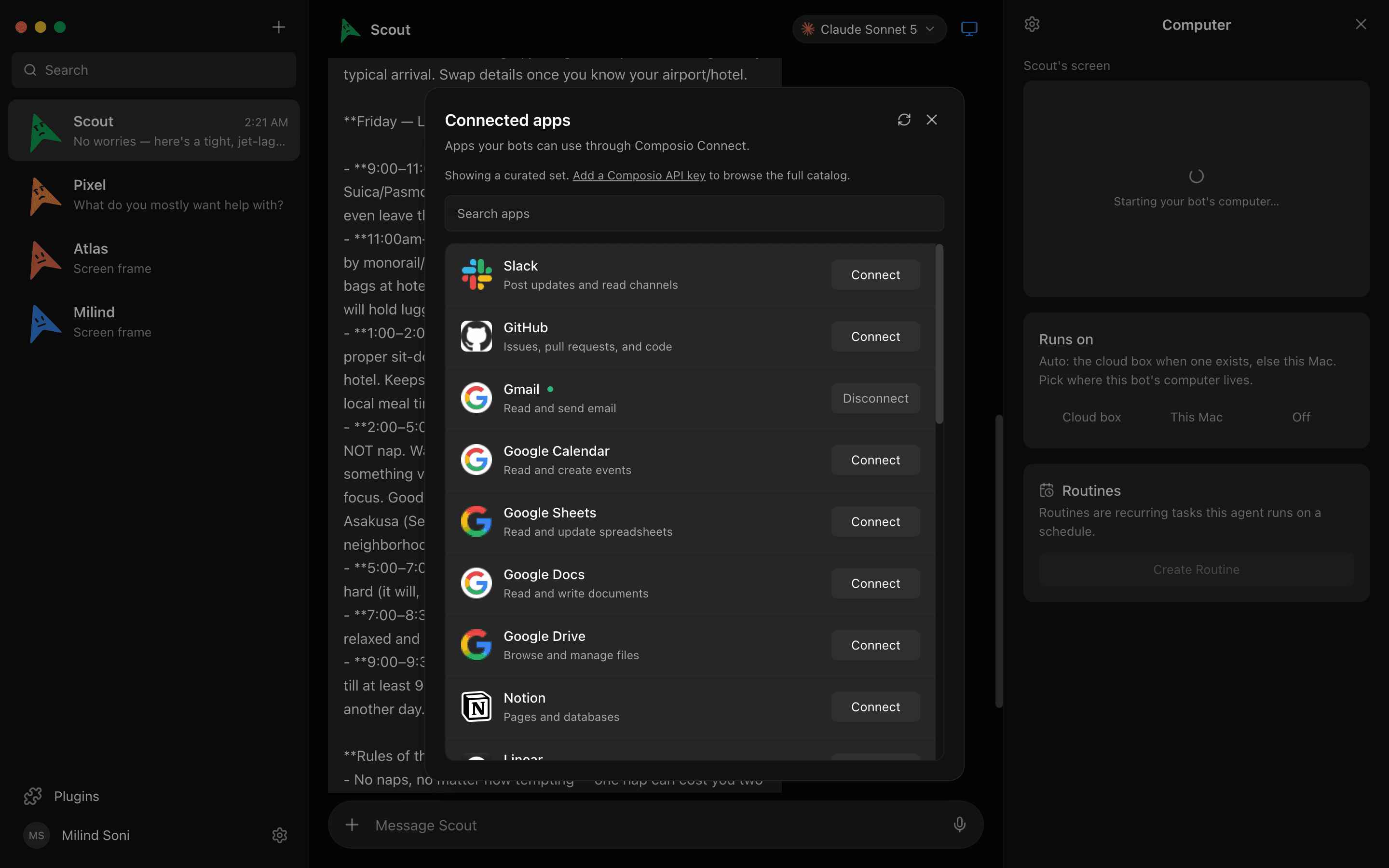
Gmail, Slack, GitHub, Notion, Linear and hundreds more over Composio. OAuth once, and every bot can use them as tools.
Bots that work as a team
Put bots in a group room. One answers by default, or everyone does, or only the ones you @mention. Bots can ask each other questions and hand off work, and a peer-comms approval card lets you decide who talks to whom. Put the whole room on a call, or export the team for someone else to import.
Bots that talk back
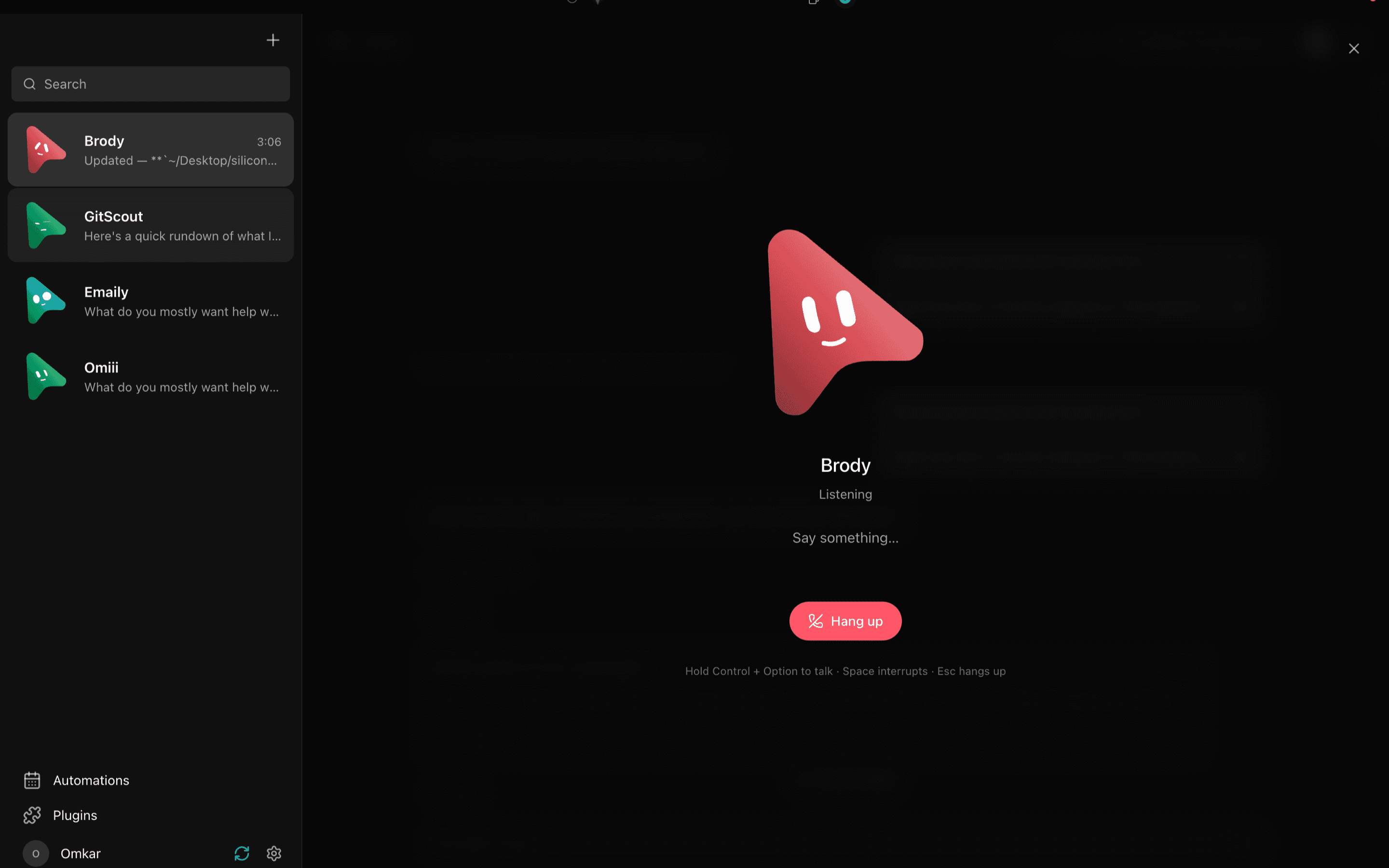
Press the speaker on any reply, or hit call and have a conversation. The bot hears you, narrates its work, and asks for approvals out loud. Bring your own ElevenLabs key.
Which one should you choose?
Choose Grok Bot if you already pay for SuperGrok Heavy or Cursor Ultra, Grok is the only model you need, and you are fine with your work living in xAI's cloud.
Choose OpenMausBot if you have Claude, Codex, or Grok subscriptions and want to use them, want a different model per bot, need your data on your own machine, or have a security review to pass.
Frequently asked questions
- Is OpenMausBot really free?
- Yes. The whole app is MIT licensed with no paid tier and no locked features. You only pay the model providers you already use, such as your Claude or Codex subscription.
- Do I need a Grok subscription?
- No. OpenMausBot runs on whichever agent CLIs you have installed: claude, codex, or grok. Any one of them is enough to start.
- Is OpenMausBot affiliated with xAI?
- No. It is an independent open-source project inspired by Grok Bot. Grok is a trademark of its owner, and OpenMausBot has no token or cryptocurrency of any kind.
- Where does my data go?
- Nowhere, unless you send it. Transcripts, keys, and events live in
~/.openmausboton your own disk, and the harness listens only on127.0.0.1.
Get started in two minutes
The harness is embedded, so there is nothing else to install. Download for macOS, Windows, or Ubuntu, paste the keys you already have, and meet your first bot. Or read the source on GitHub first. Everything on the features list is free, forever.